
You might have noticed it starts small. Maybe words on a screen look less sharp, headlights seem harsher at night, or you keep wondering whether a change in your vision is just age or something that needs attention. That uncertainty can wear on you, because your eyesight affects nearly every part of daily life, from work and driving to reading a text from someone you love. When you visit an Eye doctor in McLean, you want answers that feel clear and grounded, not rushed or vague.
That is where modern tools can make a real difference. Today, advanced eye care technology helps doctors catch problems earlier, measure changes with more precision, and guide treatment with greater confidence. In simple terms, these tools give your eye doctor a better view of what is happening inside your eyes, often before you would notice major symptoms yourself.
Why does better imaging matter so much when your vision changes?
When your vision feels off, the hardest part is often not knowing why. A standard eye exam is still important, but some conditions develop quietly. Glaucoma, macular degeneration, diabetic eye disease, and retinal tears can progress before pain or obvious vision loss appears. Because of that, waiting for strong symptoms can leave you with fewer options.
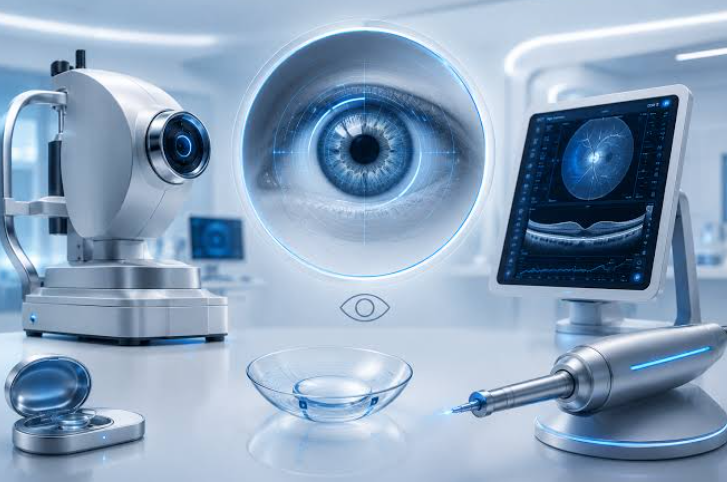
So, where does that leave you? It means the tools used during an exam matter almost as much as the exam itself. A modern technology used by eye doctors approach often includes digital retinal imaging, visual field testing, corneal mapping, and optical coherence tomography, often called OCT. These tests help your doctor look beneath the surface and compare your results over time, which is often how subtle disease is found.
OCT is one of the clearest examples. It creates detailed cross section images of the retina, allowing an eye doctor to see layers of tissue that would otherwise be hard to assess. The National Eye Institute explains how optical coherence tomography changed vision care by helping doctors detect and monitor eye disease with far more detail than older methods alone.
How do advanced tools help an eye doctor catch problems earlier?
Early detection is not just a medical phrase. It can affect whether a condition is watched, treated with drops, managed with injections, or addressed with surgery. It can also affect cost, stress, and how much vision you keep. If a doctor can spot swelling in the retina early, for example, treatment may begin before daily tasks become harder. If the optic nerve shows subtle damage, glaucoma care can start before major blind spots develop.
Think about a common situation. You have diabetes, your sight seems mostly fine, and you are tempted to put off your exam. Yet diabetic changes can begin in the retina before you feel anything. With imaging and careful follow up, an eye doctor may find tiny signs of leakage or swelling early enough to protect your sight. That is not about fear. It is about giving you a fair chance to act in time.
Research teams at the National Eye Institute continue to improve imaging methods that help doctors study eye disease with more precision. You can see that work in the NEI’s clinical and translational imaging research, which supports better diagnosis and monitoring across many eye conditions.
What does all this technology actually change for your care?
It changes the quality of the conversation. Instead of hearing that something “might be fine,” you are more likely to see images, measurements, and trends. That can make a stressful visit feel more understandable. It also helps your doctor explain why monitoring is enough in one case, while treatment is needed in another.
There is also a practical side. Better data can reduce guesswork, help track whether treatment is working, and support referrals when a specialist is needed. For someone dealing with dry eye, cataracts, glaucoma risk, or retinal disease, that kind of clarity matters. A strong eye doctor does not rely on machines alone, of course. The technology supports clinical judgment. It does not replace it.
See also: How Consultants Integrate Strategy Across All Business Levels
Which eye care tools are worth asking about at your next visit?
If you are wondering what is worth your time and money, it helps to compare what these tools actually do.
| Technology or Test | What It Helps Detect | Why It Adds Value |
|---|---|---|
| Optical Coherence Tomography (OCT) | Macular degeneration, diabetic swelling, glaucoma related nerve changes | Shows detailed retinal layers and helps track small changes over time |
| Digital Retinal Imaging | Retinal damage, bleeding, pigment changes | Creates a visual record for comparison at future visits |
| Visual Field Testing | Peripheral vision loss, often linked to glaucoma | Finds blind spots you may not notice in daily life |
| Corneal Topography | Irregular cornea shape, keratoconus, contact lens issues | Maps the cornea to improve diagnosis and treatment planning |
If your doctor recommends one of these tests, it is reasonable to ask what question the test is trying to answer. That simple step can help you feel more informed and less like you are just moving through a checklist.
What can you do right now to make the most of advanced eye care?
1. Ask what the doctor is monitoring. If a test is ordered, ask what condition is being checked, what the baseline looks like, and what changes would be concerning. Clear answers can make follow up visits feel less stressful.
2. Keep up with repeat imaging when advised. One scan is helpful, but trends often matter more than a single snapshot. If your eye doctor wants to compare images over six months or a year, that comparison may be the key to spotting disease early.
3. Share your full health picture. Diabetes, high blood pressure, autoimmune conditions, headaches, and even certain medications can affect your eyes. The more your eye doctor knows, the more useful those advanced tools become.
When it comes to protecting your sight, what is the next best step?
You do not need to understand every machine in the exam room to benefit from it. What matters is knowing that modern vision care can offer more than a basic look at the eye. With the right imaging, careful follow up, and a thoughtful eye doctor, small problems can be found sooner and treated with more confidence.
If your vision has changed, or if it has simply been a while since your last exam, now is a good time to schedule a visit and ask how advanced technology can support your care. Peace of mind often begins with a closer look.