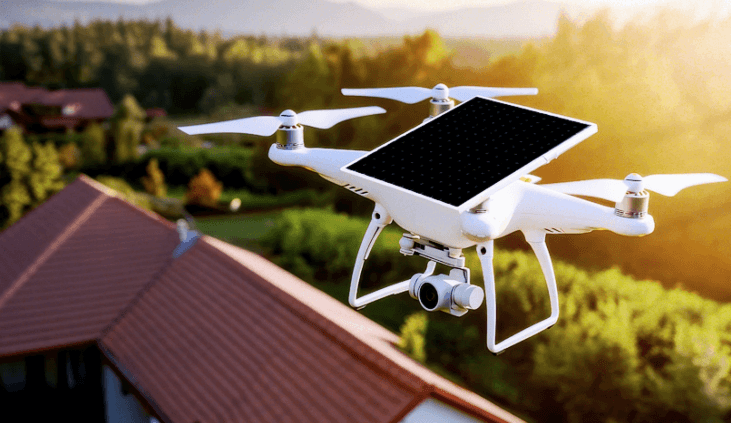

Drones are redefining how industries collect data and assess risk. They enable autonomous inspections, rapid data capture, and targeted surveys with standardized pipelines and real-time perception. Coordinated multi-drone operations expand coverage and throughput while payloads are tuned to mission goals. Regulatory compliance, safety, and governance frame deployment, driving faster decisions and lower downtime. The implications for ROI are clear, yet the path to scalable adoption raises questions that demand careful consideration.
What Drones Bring to Industries: Core Capabilities
Drones bring a distinct set of capabilities that translate into tangible value across sectors. They enable autonomous inspections, enabling rapid data collection with reduced risk and downtime.
Payload optimization drives efficiency by tailoring sensors and tools to mission goals, maximizing insights per flight.
Operational autonomy lowers labor intensity, while standardized data pipelines support scalable, repeatable decision-making across industries.
Real-World Use Cases by Sector
Real-world deployments illustrate how sector-specific needs shape drone applications, with aviation, energy, construction, agriculture, and public safety showing distinct patterns in data collection, inspection cadence, and decision speed.
Unmanned perception enables real-time situational awareness across domains, while autonomous collaboration coordinates multi-drone tasks, optimizing coverage, workflow, and risk management without compromising operator independence or freedom to innovate within regulatory bounds.
Evaluating Drone Solutions: Safety, Compliance, and ROI
Evaluating drone solutions requires a disciplined assessment of safety, regulatory compliance, and return on investment to ensure deployments align with operational goals. The analysis emphasizes robust risk mitigation, transparent drones ethics considerations, and measurable ROI metrics. Airspace governance frameworks shape approval timelines and flight freedoms, guiding procurement. Decisions balance performance, cost, and compliance, delivering scalable, responsible autonomy across industries without compromising safety or public trust.
The Road Ahead: Trends, Challenges, and Next Steps
As the industry progresses, the road ahead is shaped by converging trends, persistent challenges, and deliberate next steps that collectively determine practical adoption and sustained value.
Drones will navigate evolving future regulation and heightened ethics considerations, demanding interoperable standards, transparent data governance, and risk-aware deployment.
Practical progress hinges on scalable training, robust cybersecurity, and collaborative frameworks that align safety, innovation, and market freedom.
Frequently Asked Questions
How Do Drones Impact Small Businesses With Limited Budgets?
Drones budget constraints influence small business adoption, prioritizing cost-effective models, phased deployments, and scalable services. They enable reconnaissance, inspection, and marketing while preserving funds; strategic investments maximize efficiency, minimize risk, and align with growth-oriented, freedom-seeking operational autonomy.
What Are the Most Underrated Industries Benefiting From Drone Tech?
Underscored by a single metaphor, drones reveal: underrated agriculture and overlooked inspection are benefiting most. In pragmatic terms, efficiencies rise, costs fall, and transparency expands, enabling agile, freedom-seeking industries to optimize operations with disciplined, data-driven aerial perspectives.
How Do Drones Integrate With Existing Enterprise Software?
Drones integration with enterprise software occurs through API bridges, data pipelines, and standardized workflows, enabling real-time analytics and asset management. Enterprises integrate flight data, telemetry, and imagery into ERP, CRM, and CMMS systems for streamlined decision-making.
See also: keepagents
Can Drones Replace Human Jobs or Only Augment Them?
Drones replacing jobs is unlikely across broad sectors; they primarily augment human labor. In specialized tasks, automation scales efficiency, yet human oversight, decision-making, and complex analytics remain essential for strategic value and safety.
What Are Privacy and Ethical Considerations for Drone Use?
In allegory, a vigilant crow guards a ledger; the drone age raises privacy concerns and data ownership questions. The industry analyzes framed access, consent, and accountability, balancing innovation with citizen rights, transparent policies, and secure, auditable data stewardship.
Conclusion
Drones have become the operating system of modern industry, translating aerial data into actionable insight. They connect sensors, algorithms, and human judgment into streamlined workflows, elevating safety, speed, and precision. As regulatory and technical hurdles tighten, standardized data pipelines and real-time perception will anchor scalable adoption. The trajectory is clear: targeted payloads, multi-drone orchestration, and rigorous ROI metrics will redefine efficiency. In this evolving cockpit, industries gain not just capability, but a disciplined, data-driven competitive edge.