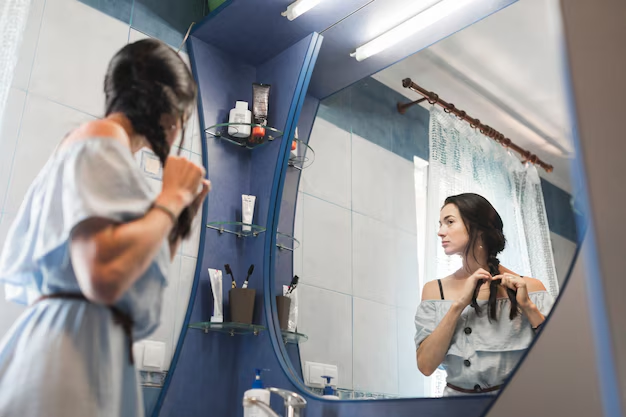

A bathroom feels more complete when the major fixtures work together visually and practically. A well-matched bathroom vanity and mirror can make the room feel balanced while providing useful storage, lighting, and grooming space. Luxurious Glass offers mirror options that can complement different vanity styles, from compact floating units to traditional cabinetry. Choosing both pieces as a pair also makes it easier to create a consistent look instead of adding fixtures that compete for attention.
Start With the Vanity Size
The vanity usually determines the amount of available wall space, so its dimensions should be established before choosing a mirror. Measure the width of the vanity, the distance between nearby walls, and the height available above the countertop. These measurements help prevent a mirror from looking too large or too small once everything is installed.
A mirror can match the vanity width or be slightly narrower. A mirror that extends considerably beyond the vanity may make the wall feel crowded, particularly in a small bathroom. For double-sink vanities, a wide horizontal mirror can work well, while two individual mirrors can give each sink its own defined area.
Depth matters as well. A deep vanity may project farther into the room, while a shallow unit can preserve walking space. The mirror should complement these proportions rather than make one fixture appear visually heavier than the other.
Match the Mirror Shape to the Vanity Style
Shape has a strong influence on the character of a bathroom. Rectangular mirrors are versatile and pair naturally with straight-edged vanities. Their clean lines can reinforce a contemporary or minimalist design.
Round and oval mirrors introduce softer curves. They can be particularly effective above vanities with square countertops, creating contrast without requiring additional decorative elements. An arched mirror offers another option for adding architectural interest while maintaining a polished appearance.
The vanity’s hardware can also guide the choice. Brushed metal handles, black fixtures, brass accents, or frameless cabinetry can each suggest different mirror frame finishes. Matching every finish exactly is not necessary, but the pieces should feel related.
Consider the Wall and Countertop Proportions
A mirror should have enough breathing room around it. Installing a large mirror in a narrow wall section can make the bathroom feel cramped, even when the vanity itself fits comfortably. On a wider wall, a larger mirror can help fill empty space and create a stronger focal point.
The countertop also affects the visual balance. Busy stone patterns may pair better with a simple mirror, while a plain countertop gives you more freedom to introduce an interesting frame or decorative shape.
For bathrooms with wall-mounted sconces, leave enough room between the mirror and surrounding fixtures. Planning the mirror, lighting, and vanity together avoids awkward gaps and makes installation easier.
Choose Between Framed and Frameless Mirrors
Framed mirrors can add color, texture, and definition to the vanity area. Wood-style frames may suit warm interiors, while metal frames can complement industrial, contemporary, or transitional bathrooms. A decorative frame can also repeat a finish already used elsewhere in the room.
Frameless mirrors have a cleaner appearance and can make a compact bathroom feel more open. They work particularly well with minimalist vanities, floating cabinets, and simple tile patterns.
The choice does not have to depend entirely on style. Think about maintenance too. A frame with intricate detailing may collect more dust and moisture than a smooth frameless design. Bathrooms with frequent condensation may benefit from materials that can handle regular exposure to humidity.
Think About Mirror Height
Mirror height should support comfortable daily use. The mirror needs to be positioned so that the people using the bathroom can see themselves without excessive bending or stretching.
The height of the vanity, countertop, faucet, and ceiling should all be considered before installation. Tall mirrors can make a bathroom appear more spacious and provide a larger viewing area. Shorter mirrors can work well where wall-mounted lighting or architectural features limit the available space.
For households with people of noticeably different heights, a larger mirror can provide more flexibility. The same principle applies to guest bathrooms, where the space may be used by a wide range of people.
Plan Lighting Before Installation
Good lighting can change how both the vanity and mirror look. Natural light is useful during the day, but artificial lighting is necessary for evening routines and tasks such as shaving, applying makeup, or styling hair.
Wall sconces positioned beside the mirror can provide balanced illumination and reduce harsh shadows across the face. A fixture above the mirror can also work, provided it distributes light evenly.
Backlit mirrors offer another design option. They can provide soft illumination while creating a subtle visual effect around the mirror. For a bathroom that already has decorative ceiling lighting, a simpler mirror may keep the overall design from becoming visually busy.
The color temperature of the bulbs deserves attention too. Extremely cool light can make a bathroom feel stark, while very warm lighting may affect how colors appear during grooming routines.
Select Materials for Bathroom Conditions
Bathrooms produce moisture, heat, and frequent temperature changes. Vanity and mirror materials should therefore be selected with the environment in mind.
For the vanity, moisture-resistant finishes and durable countertop materials can help the unit withstand regular use. Solid surfaces, properly sealed natural stone, quartz, and other bathroom-suitable materials offer different combinations of appearance and maintenance requirements.
Mirror construction also matters. Quality glass with suitable backing and edge finishing can provide a cleaner appearance and better durability. Areas with persistent humidity may benefit from mirrors designed specifically for bathroom environments.
Cleaning requirements should be considered before purchasing. Smooth surfaces are generally easier to maintain, while textured finishes and detailed frames may require more attention.
Coordinate Colors Without Making Everything Identical
A bathroom does not need every fixture to have the same finish. In fact, using slightly different but compatible finishes can create a more layered appearance.
A white vanity with a black-framed mirror can create strong contrast. Warm wood cabinetry can pair with a brass-framed mirror for a softer look. A neutral vanity and frameless mirror can keep attention on patterned tiles, countertops, or decorative lighting.
Choose one or two finishes to repeat throughout the room. For example, the mirror frame can relate to cabinet handles, faucet hardware, or light fixtures. This creates visual connection without making the space feel overly coordinated.
Account for Storage and Everyday Use
Appearance should not overshadow practical needs. A vanity with drawers and cabinets can keep toiletries, towels, cleaning supplies, and grooming products out of sight. A smaller vanity may have a cleaner appearance but provide less storage.
The mirror can contribute to storage too. Mirrored medicine cabinets provide concealed shelving behind the reflective surface. This option is especially useful in bathrooms where floor and countertop space are limited.
Think about what needs to remain on the countertop. If several products are used every day, additional drawers or shelving can help maintain an uncluttered vanity area.
Keep Installation Requirements in Mind
The perfect-looking combination can still create problems if the installation details are overlooked. Check the wall construction, plumbing locations, electrical requirements, and mounting points before ordering the mirror and vanity.
A heavy mirror may require appropriate wall support and mounting hardware. Electrical mirrors with integrated lighting or other features may require professional installation and suitable wiring.
Also account for doors, drawers, faucets, and nearby fixtures. Everything should open and operate without hitting the mirror, wall, lighting, or another bathroom fitting.
Create a Pair That Fits Your Space
A bathroom vanity and mirror should feel like two parts of the same design rather than unrelated purchases. Start with measurements, then consider shape, proportion, lighting, materials, storage, and finishes. These details make it easier to choose pieces that look right and function well over time.
A carefully selected mirror can give a simple vanity more personality, while the right vanity can provide the practical foundation for the entire bathroom. Before making a final purchase, compare the dimensions and finishes together and consider how the pair will work with the rest of the room. For assistance selecting a mirror that suits your bathroom design, contact us today and discuss your requirements with Luxurious Glass.