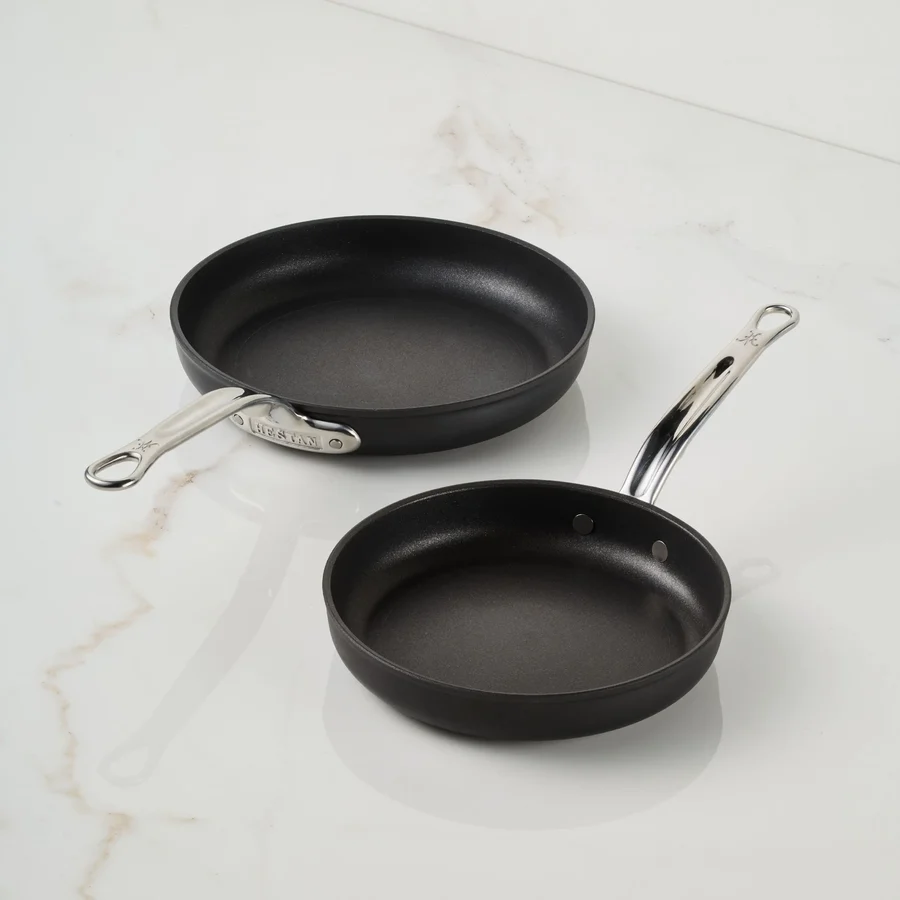

Diamond titanium nonstick cookware combines a nonstick cooking surface with reinforcing materials intended to improve surface durability. The terms “diamond” and “titanium” describe the reinforcement used in the cooking surface rather than suggesting that the entire pan is made from either material.
The construction beneath the coating matters just as much. A pan can have a durable nonstick surface but still perform poorly if its base distributes heat unevenly or becomes unstable during cooking. TITUM Fusion cookware pairs its reinforced surface with an aluminum body and a Double Impact Base designed to support consistent heating and resist warping.
For shoppers comparing diamond titanium nonstick cookware, understanding the relationship between the surface and the underlying pan provides a clearer way to assess durability, food release, cleaning, and cooking performance.
What Is Diamond Titanium Nonstick Cookware?
Diamond titanium nonstick cookware uses reinforcing materials within or as part of a nonstick surface system. The purpose is to make the coating more resistant to the wear that can occur through regular cooking, cleaning, and handling.
The exact construction varies between manufacturers, so the terms “diamond reinforced” and “titanium reinforced” should always be considered alongside the product’s actual specifications.
Understanding Diamond-Reinforced Nonstick Surfaces
Diamond reinforcement refers to the use of diamond particles within the nonstick surface. Diamond is extremely hard, so incorporating it into a coating system can improve resistance to abrasion.
The reinforcement does not mean the pan has a layer of solid diamond. Instead, particles are incorporated into the surface structure to help it withstand repeated use.
In TITUM Fusion cookware, the nonstick surface is reinforced with diamond and titanium. The manufacturer states that the coating is 22 times more durable than conventional nonstick coatings.
Understanding Titanium-Reinforced Construction
Titanium reinforcement is used to strengthen the nonstick surface and improve its resistance to everyday wear. Titanium is valued for its strength and durability, making it useful as part of a reinforced cookware surface.
The effectiveness of titanium reinforcement depends on how it is incorporated into the coating system. A product should therefore be evaluated according to its complete construction rather than the presence of the word “titanium” alone.
Why Reinforcement Is Used in Nonstick Cookware
Nonstick coatings naturally experience repeated contact with food, utensils, cleaning materials, and heat. Reinforcement can help reduce the effects of this repeated use.
A stronger surface can maintain its food-release properties for longer when it is properly cared for. The pan’s base and body still play a separate role because surface durability cannot compensate for poor structural construction.
How Does Diamond Titanium Nonstick Cookware Work?
The cooking experience comes from several components working together. The coating controls how food interacts with the cooking surface, while the pan body and base influence how heat reaches the food.
The Role of the Nonstick Surface
A nonstick surface creates a lower-adhesion cooking environment. Food can release more easily, which reduces the need for excessive oil and makes cleanup simpler.
The surface also affects how food behaves during cooking. A well-designed nonstick coating can support browning and searing while retaining the easy-release characteristics expected from nonstick cookware.
TITUM Fusion uses a PTFE-based nonstick surface that is reinforced with diamond and titanium. The manufacturer states that the coating is FDA-approved for food contact when used as intended.
The Role of Reinforcing Materials
Reinforcing materials are primarily concerned with surface durability. Diamond and titanium particles help create a tougher coating system that is designed to tolerate repeated cooking use.
This does not make the cookware immune to scratches or damage. Appropriate utensils, cleaning methods, and temperature control remain important for preserving the surface.
How Construction Can Influence Cooking Performance
The body underneath the nonstick surface has a direct effect on heating. TITUM Fusion combines a lightweight aluminum body with a Double Impact Base made using two stainless steel discs bonded to the aluminum.
The base is designed to stay flat, resist warping, and help keep oil centered. This construction gives the cookware a structural role that works alongside the reinforced surface.
What Are the Potential Benefits of Diamond Titanium Nonstick Cookware?
The appeal of reinforced nonstick cookware comes from the combination of easy food release and increased resistance to everyday wear. Its usefulness also depends on how the pan is designed beyond the coating itself.
Food Release
A nonstick surface reduces the tendency of food to stick firmly to the pan. This can be particularly useful for foods that are difficult to release from bare metal cooking surfaces.
The smoother cooking surface also makes it easier to move food around the pan without excessive scraping.
Ease of Cleaning
Less sticking generally means less residue left behind after cooking. That can reduce the effort required during cleanup.
TITUM Fusion cookware is dishwasher safe, adding another convenient cleaning option. Gentle cleaning practices can still help preserve the surface over time, even when dishwasher use is permitted.
Resistance to Everyday Wear
Diamond and titanium reinforcement is intended to increase resistance to the abrasion associated with normal cookware use. The manufacturer states that the TITUM Fusion coating is 22 times more durable than conventional nonstick coatings.
Durability is affected by more than the coating specification. Sharp utensils, abrasive cleaning products, overheating, and rough storage can all shorten the useful life of a nonstick surface.
Cooking Versatility
A reinforced nonstick surface does not have to be limited to low-heat cooking. TITUM Fusion is designed for cooking tasks that include searing, browning, frying, sautéing, and simmering.
The cookware is also oven safe up to 500°F and compatible with induction cooktops, expanding the range of cooking methods it can accommodate.
How Does Diamond Titanium Nonstick Cookware Compare With Traditional Nonstick?
Traditional nonstick cookware covers a broad range of products, from basic pans to heavily engineered premium cookware. The main difference is not simply the presence of a nonstick coating. Construction, reinforcement, and heat management can vary significantly.
Surface Construction
A conventional nonstick pan may use a simpler coating system without the same level of diamond and titanium reinforcement.
A reinforced design incorporates additional materials into the surface to improve resistance to wear. The exact result depends on the formulation and manufacturing process.
Durability Considerations
Nonstick cookware should never be treated as completely scratch-proof. Reinforcement improves resistance, but it does not eliminate the need for careful handling.
TITUM Fusion’s stated 22 times greater durability compared with conventional nonstick coatings is a manufacturer specification rather than a universal measurement for every diamond titanium product on the market.
Cooking and Cleaning Experience
Both traditional and reinforced nonstick cookware can provide easy food release and convenient cleanup. The difference may become more apparent with continued use, particularly if a reinforced surface maintains its release characteristics over a longer period.
Cleaning requirements remain relevant for both types. Non-abrasive tools and suitable utensils are preferable for protecting the cooking surface.
Is Diamond Titanium Nonstick Cookware Suitable for Everyday Cooking?
A well-designed reinforced nonstick pan can handle many of the tasks performed during routine cooking. The appropriate pan size and shape will depend on the quantity and type of food being prepared.
Cooking Breakfast Foods
Nonstick cookware is well suited to foods that benefit from easy release, including eggs and other delicate preparations. A smooth cooking surface can reduce the need for aggressive scraping and make turning or removing food easier.
Smaller skillets are useful for compact cooking tasks, while larger sizes provide additional room for multiple ingredients.
Sautéing and Pan-Frying
Sautéing requires responsive heat control and enough surface area for ingredients to make proper contact with the pan.
The aluminum body used in TITUM Fusion is designed to provide responsive heating, while the Double Impact Base supports even cooking and stability. The reinforced nonstick surface adds easier food release during sautéing and pan-frying.
Preparing Everyday Meals
Nonstick cookware can cover a broad range of routine cooking tasks, including browning, frying, sautéing, and simmering.
The TITUM Fusion range extends beyond skillets to include saucepans, an essential pan, a stock pot, and a wok. This allows the same general surface technology to be used across different cookware shapes.
For the wider range of products and cookware specifications, visit Hestan cookware.
How Should Diamond Titanium Nonstick Cookware Be Maintained?
Care has a direct effect on the service life of any nonstick surface. Reinforcement improves durability, but everyday habits still determine how much unnecessary wear the coating experiences.
Cleaning the Nonstick Surface
Use mild dish soap and a soft sponge when hand washing. Abrasive pads, harsh scouring products, and steel wool can cause unnecessary surface wear.
Although TITUM Fusion is dishwasher safe, hand washing may be preferred by people who want to minimize repeated exposure to strong detergents and high-temperature dishwasher cycles.
Selecting Suitable Cooking Utensils
Use utensils that are appropriate for nonstick cookware. Wood and silicone are practical choices because they are less likely to scratch the surface.
Sharp metal edges should not be dragged across the coating. Knives should never be used to cut food directly inside the pan.
Preventing Unnecessary Surface Wear
Avoid heating an empty pan at excessively high temperatures. Allow cookware to cool before exposing it to sudden temperature changes, particularly before washing.
Storage also deserves attention. If pans are stacked, a protective layer between pieces can reduce direct contact and friction between cooking surfaces.
How Does TITUM Fusion Use Diamond and Titanium Technology?
TITUM Fusion combines surface reinforcement with a separate structural system. The goal is to address both food interaction at the cooking surface and heat behavior through the body and base.
TITUM Fusion’s Nonstick Surface
The nonstick surface uses diamond and titanium reinforcement and is described by the manufacturer as 22 times more durable than conventional nonstick coatings.
The surface is designed for easy food release while still supporting browning and searing. It is also PFOA-free according to the manufacturer’s product information.
The Relationship Between Surface Technology and Cookware Construction
The surface cannot be considered separately from the pan underneath it. The aluminum body provides responsive heating, while the Double Impact Base uses bonded stainless steel discs to improve stability and help the cookware remain flat.
This combination gives the pan two distinct performance characteristics. The reinforced surface addresses food release and wear, while the underlying construction addresses heat response and structural stability.
FAQs About Diamond Titanium Nonstick Cookware
Is diamond titanium nonstick cookware durable?
Diamond and titanium reinforcement is intended to increase resistance to everyday wear compared with simpler nonstick surfaces. TITUM Fusion is stated by the manufacturer to have a coating that is 22 times more durable than conventional nonstick coatings. Actual longevity depends on cooking habits, utensils, cleaning, storage, and temperature control.
What does titanium do in nonstick cookware?
Titanium is used as a reinforcing material within the nonstick surface. Its role is associated with improving the surface’s resistance to wear and supporting the durability of the coating system.
What does diamond reinforcement mean in cookware?
Diamond reinforcement means diamond particles are incorporated into the nonstick surface to improve resistance to abrasion. It does not mean the cookware contains a solid diamond layer.
Is diamond titanium cookware good for everyday cooking?
Yes. Diamond titanium nonstick cookware can be suitable for regular cooking because it combines food release with a reinforced surface. TITUM Fusion cookware is designed for tasks such as frying, sautéing, searing, browning, and simmering and is rated for oven use up to 500°F.
Understanding Diamond Titanium Nonstick Cookware
Diamond titanium nonstick cookware is defined by the combination of a nonstick surface and reinforcing materials designed to improve durability. Diamond and titanium serve a different purpose from the aluminum body and stainless steel base beneath the coating.
For buyers, the useful comparison is therefore broader than coating terminology. Surface construction, heat distribution, stability, cooktop compatibility, cleaning requirements, and warranty all contribute to the overall value of a pan.
TITUM Fusion brings these elements together through a diamond and titanium reinforced nonstick surface, aluminum construction, and a Double Impact Base. Proper care remains essential, even with a reinforced coating. Using suitable utensils, avoiding abrasive cleaning methods, and storing pans carefully can help preserve the cooking surface.
For questions about products, specifications, or assistance with cookware selection, use the contact page.